
Rediscovering Photography: From 35mm Film to Drones and Mirrorless Cameras
Looking for your first camera? Learn from my journey from film to drones and get real beginner camera recommendations like the Canon R50 and Sony ZV-E10.
PHOTOGRAPHYKNOWLEDGE
Bryan Avila
10/20/20255 min read
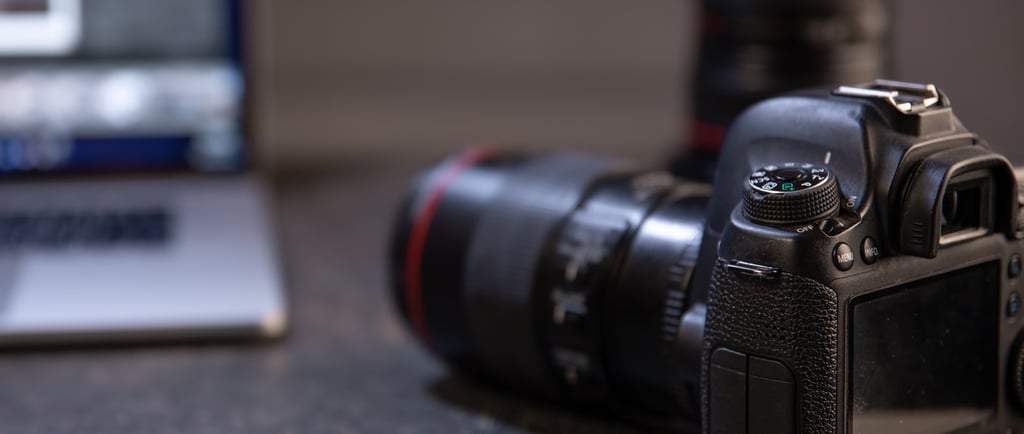
The first camera I ever used was an Olympus OM. Buying film was something that I was doing on a weekly basis, just like many other photographers. Back then, you wouldn’t know what the final image was going to look like until after you developed the film and saw the results. You were hoping and praying that you got your ISO, aperture and shutter speed correct the first time around, or second, if you were smart enough to take various shots at the same time with minor adjustments (just in case). Then you would have to write it all down in a notebook so that you could reference back to it later to see what worked and didn’t work. I was working with Probation & Parole back then and would always have my camera bag with me. Driving through the back roads of Vermont would reveal some amazing locations to stop and get a couple of pictures and since I worked 2p-10p, sunset images were always possible, especially during the fall foliage season. I left photography for a few years to concentrate on various life transitions that needed to take place.
Most people will hit middle age and have their mid-life crisis. For some, it involves the car or boat of their dreams. For others, career change and a whole new direction. For me, it was the latter. I really wouldn’t call it a mid-life crisis though. It was more of a priority shift in my personal life. I had spent so many years in the Law Enforcement field that I lost track of how many important family events I had missed because of my career. With a 2-year-old daughter at home, and not wanting to make the same mistakes I had made in the past, I knew that I needed a change, but to what? I’ve always had 2 loves in my life: aviation and photography. The question then became “how can I combine both?” I knew nothing about drones at the time but once I discovered them and what could be done, the lightbulb went off in my head. I was going to do aerial photography. Now for the hard part: how do I do that?
Just like you, I asked myself ”how do I become an aerial photographer?” (or just photographer). Of course I went to Google looking for the answer. This is the most important part of the entire process if you have no clue where to begin. No, not going to Google, but asking yourself what the particular requirements are for a specific thing. That’s how your list will start. In my case it was a simple list: You need an FAA Part 107 certification, you need a drone, and you need to know how to fly the drone. It should go without saying that you should also know how to use a camera since drones these days are nothing more than a flying camera.
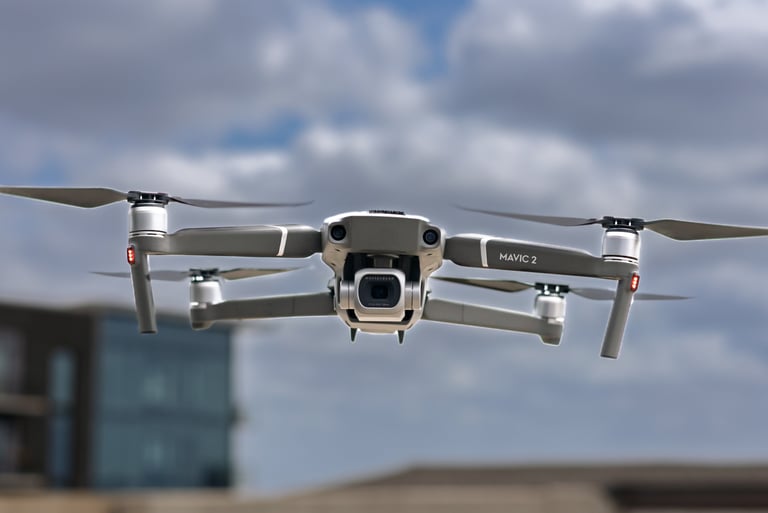
Next thing to ask yourself is “why is my end goal?”. Since there are many different types of cameras with many different capabilities, knowing what you want to do with it is the second most important thing to ask yourself. This will help you narrow down what you should be looking for. I followed the same process for both the drone and the camera. For the drone, after about 2 months of research, I settled on a Mavic 2 Pro. Keep in mind that this was 2021. I had been looking for something that was good/great for both photo and video, which is what I wanted.
When it came to the camera, I was looking for the same thing: something that was good/great for photo and video. After researching for a few months, I narrowed it down to 2 cameras: The Sony A7iii and the Canon EOS R5. Both have their pros and cons, and I was facing a big one for me at the time: price. I had been leaning towards the Canon EOS R5 but that was more expensive than the Sony A7iii at the time. Since the Sony A7iii had come out almost 4 years earlier, I could find a used one for an affordable price. The Canon EOR R5 had been out for about a year and there were no used ones to be found at a reasonable price. Luckily, I had a good friend that is a Real Estate photographer that was using the Canon EOS R and said that I should check it out. Now to start the comparisons again, this time with the Sony A7iii and the Canon EOS R. The Canon EOS R won it for me. Since I was planning on primarily shooting portraits, landscape and events, the EOS R checked all the boxes that I needed, plus it was great for video.
Now, here are some things to look for in a “good everyday” camera:
Feature & Why it matters for everyday/ family/travel use
Autofocus / subject detection You’ll often be shooting moving kids, animals, etc. A camera with good face/eye tracking or subject tracking helps reduce blurry or missed-focus shots.
Image stabilization Helps with handheld shots in lower light (indoors, dusk, gardens) without always needing a tripod.
Good lens options (versatility) You want a lens (or set) that handles wide-to-moderate zoom (say ~24–70 mm equivalent) or something versatile so you don’t have to carry many lenses.
Compact & lightweight The easier the camera is to carry, the more you’ll actually use it.
User-friendly interface / ease of switching modes
Especially early on, you want a camera that doesn’t make you fight it — intuitive menus, good auto modes, helpful guides, flip or tilting screen, etc.
Image quality & low-light performance Bigger sensors, good processors, and good lenses make for cleaner images in challenging light.
Future growth / system support Even if you’re not a “prosumer,” having access to better lenses, accessories, possibly upgrading later is a plus.
If you’re a non-professional looking for a camera, here is a list of top recommendations with a few highlights and what makes them good:
· Canon EOS R50
Great all-around beginner mirrorless with Canon’s intuitive controls, good autofocus, and a growing RF-S lens ecosystem.
· Canon EOS R100
Slightly more basic (and more affordable) than the R50, but still solid image quality and ease-of-use. A sensible “first serious camera.”
· Sony ZV‑E10
Very good hybrid for both photos and video — flip screen, good autofocus, etc. (Especially good if you might vlog or shoot video.)
· Nikon Z50 II
Well-rounded APS-C mirrorless from Nikon. Good ergonomics, lens support, and performance.
· Nikon Z fc
Stylish, fun to carry, and gives good image quality. The retro design is appealing, and it makes shooting feel more “fun.”
· Sony a6100
A compact, dependable APS-C mirrorless that gives good image quality without breaking the bank.
· Sony a7 IV
A full-frame option. If you want to “invest” for future growth and don’t mind spending more (and carrying slightly more), this gives you more headroom in image quality, especially in low-light.
· Sony ZV‑E10 II
The latest version in the ZV line, with further refinements — good if you want something more “future proof” in the video/photos hybrid space.
Ultimately, the choice is yours. You can find reviews for all these models, as well as my top 2 on YouTube. Do the research and make the best decision for you and what you want.
Photography
Capturing moments in the Houston area beautifully.
Portfolio
© 2025. All rights reserved.